Turek group


The working group develops methods for the design of chemical and electrochemical reactors in which porous catalysts or electrocatalysts are used. On the micro- and mesoscale, issues relating to the design of pore systems are addressed in order to improve the transport and distribution of liquid and gaseous reactants with regard to the best possible utilization of the porous reaction system. In addition to a comprehensive characterization of the pore systems and the measurement of the effectiveness of the catalysts and electrocatalysts, mathematical models for the coupling of transport and reaction on the pore scale are also required. On the macroscale, the geometric design of catalysts and electrodes as well as the chemical or electrochemical reaction apparatus is investigated in order to achieve the highest possible efficiency of external mass and heat transport. Dynamic processes are also becoming increasingly important in this context, bringing with them new challenges with regard to the description of reaction kinetics and reactor modeling.
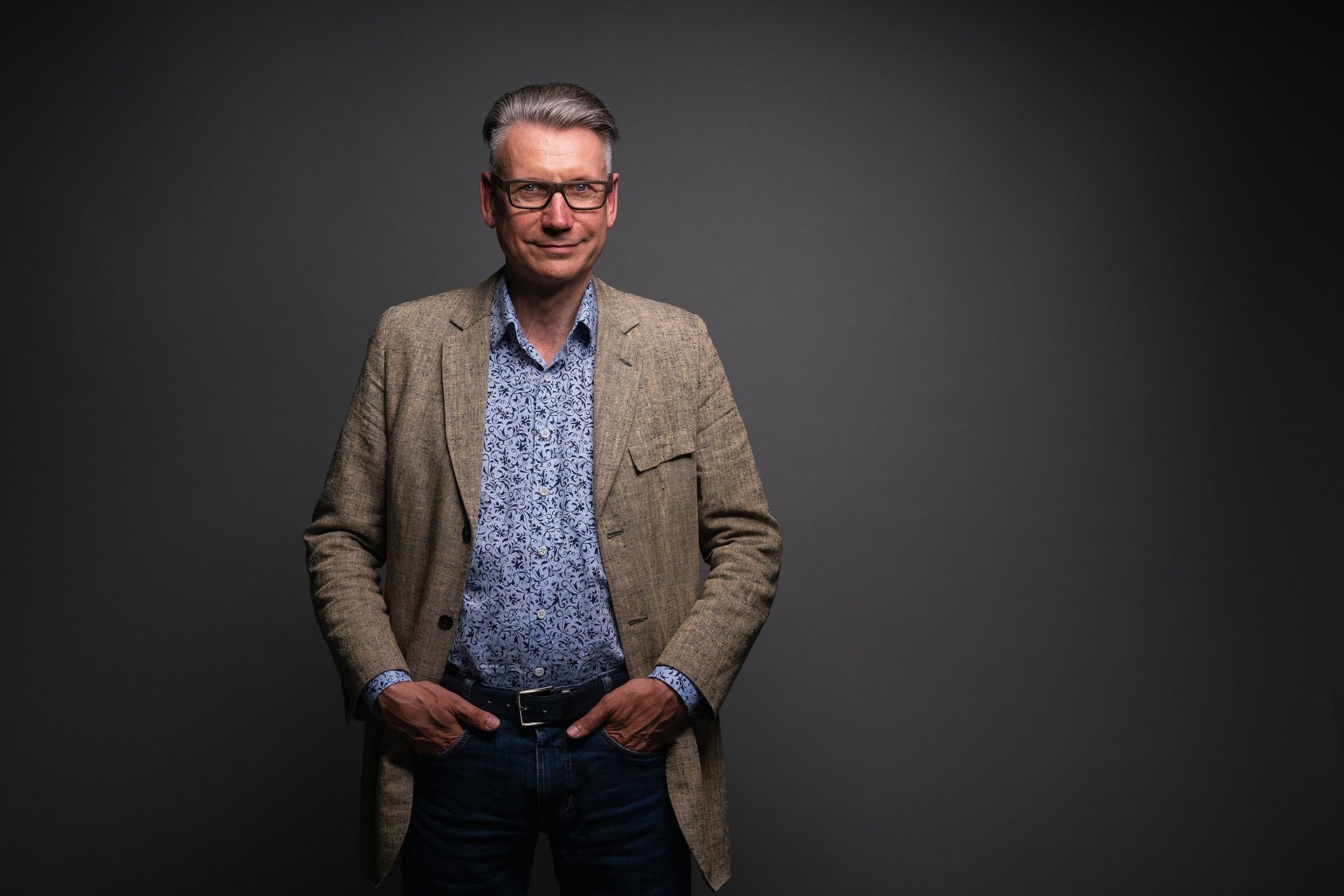
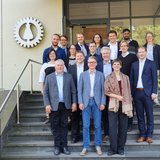
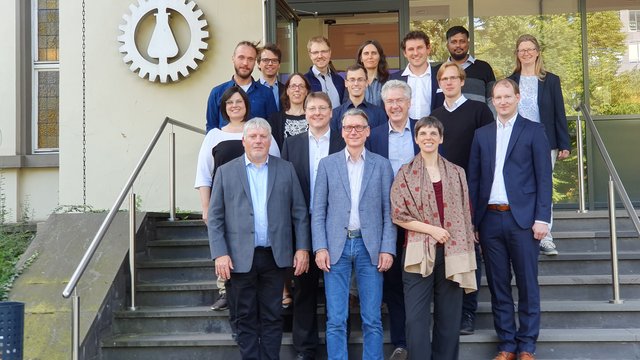
Foto von Prof. Dr.-Ing. Thomas Turek
Contact

Phone: +49 5323 72-2184
E-Mail: turek@icvt.tu-clausthal.de

Address
Building C16, Room 207
Leibnizstr. 17
38678 Clausthal-Zellerfeld
Research projects

Alkaline water electrolysis with gas diffusion electrodes

Alkaline water electrolysis with gas diffusion electrodes

As part of this project, physico-chemical measurements are carried out on gas diffusion electrodes in order to use them in a "hybrid" cell in alkaline water

DFG Research Unit 2397

DFG Research Unit 2397

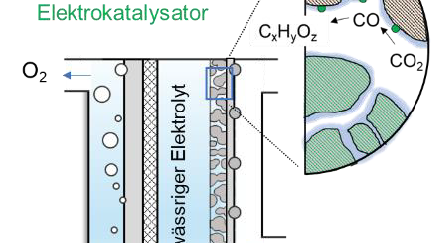
Multiscale analysis of complex three-phase systems: oxygen reduction at gas diffusion electrodes in aqueous electrolyte.

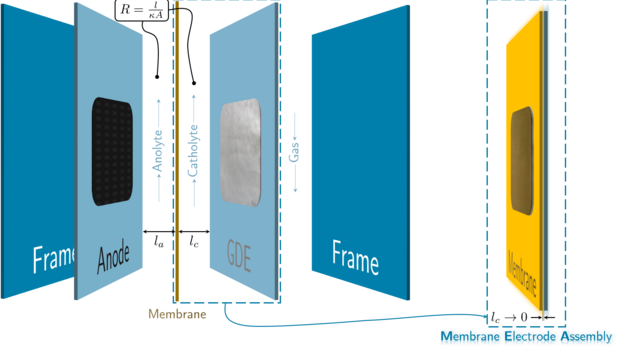
Development of membrane electrode assemblies for electrochemical CO2 reduction

Development of membrane electrode assemblies for electrochemical CO2 reduction …

The electrochemical reduction of CO₂ is a promising method for utilizing CO₂ as a raw material. As part of this project, membrane electrode assemblies based on

Development of Sustainable Gas Diffusion Electrodes for Electrochemical CO2 Reduction

Development of Sustainable Gas Diffusion Electrodes for Electrochemical CO2 Reduction …

A promising method for implementing a carbon cycle is the electrochemical reduction of CO₂. Within this project, sustainable gas diffusion electrodes are to be

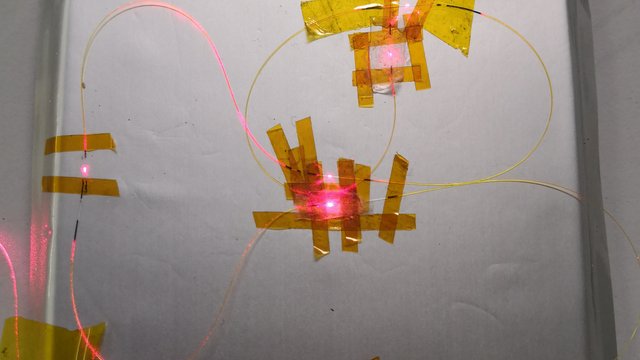
Fibre optical sensors and improved models for state estimation and cell design

Fibre optical sensors and improved models for state estimation and cell design …

CircularLIB - Project 2-7

InnoEly - Water electrolysis innovation laboratory

InnoEly - Water electrolysis innovation laboratory

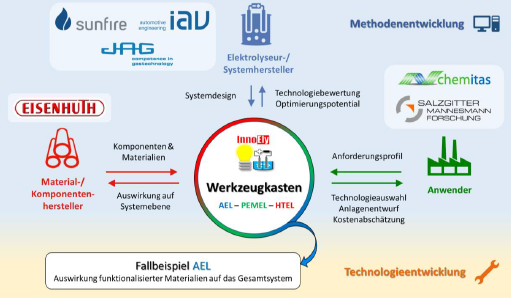
Creation of a characterization and modelling toolbox for the further development of technical water electrolysers for the production of green hydrogen.


Catalytic methanation of carbon dioxide

Catalytic methanation of carbon dioxide

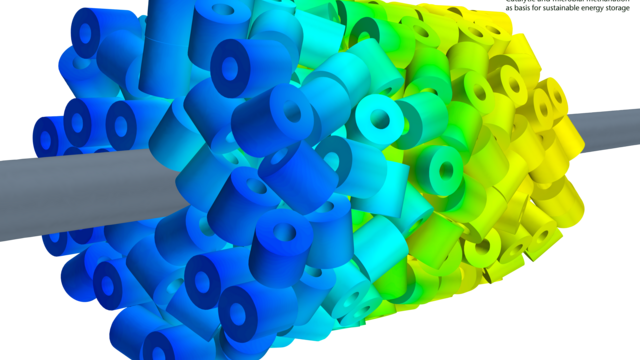
CO2 methanation is investigated both experimentally and simulatively with particle-resolved CFD simulations.

Control of the microenvironment in GDEs to increase CO selectivity in CO2 electrolysis

Control of the microenvironment in GDEs to increase CO selectivity in CO2 electrolysis …

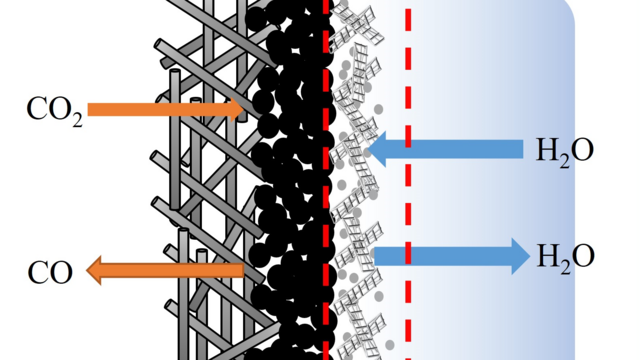
This project aims to advance the reduction of CO2 into carbon monoxide (CO) by utilizing silver-based gas diffusion electrodes (GDEs) paired with ion-conducting

LO2CAL – Increasing the Lifetime of the Oxygen-Depolarized Cathode for Industrial Use in Chlor-Alkali Electrolysis

LO2CAL – Increasing the Lifetime of the Oxygen-Depolarized Cathode for Industrial Use in…

The oxygen-depolarized cathode (ODC) is a specialized gas diffusion electrode used in chlor-alkali electrolysis that reduces electrical energy consumption by up

Phosphorus recycling from sewage sludge

Development and modeling of an advanced reactor for sustainable phosphorus recycling.

TEN.efzn – State Graduate Program “Hydrogen and Hydrogen Derivative Ammonia” – Subproject III.2

TEN.efzn – State Graduate Program “Hydrogen and Hydrogen Derivative Ammonia” – Subproject III.2 …

In this project, catalysts for ammonia decomposition are characterized physically and chemically. Experiments are carried out in various laboratory facilities

Maleic anhydride synthesis in a millistructured fixed-bed reactor

Maleic anhydride synthesis in a millistructured fixed-bed reactor

The aim of this project is to develop a mathematical model of the process with the aid of experiments in a near-isothermal reactor.

StaR - Stack Revolution

StaR - Stack Revolution

The aim of the joint project is to drastically reduce the costs of alkaline water electrolysis for the production of green hydrogen.